
Dental X-rays and diagnostics in Camden
Modern digital imaging to help detect dental issues that can't be seen with the eye alone.
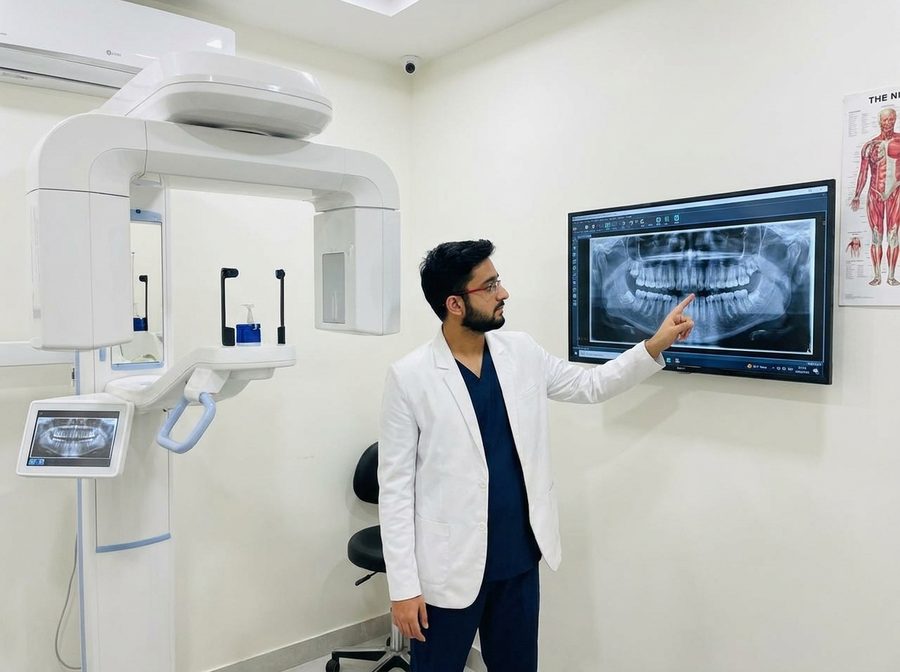
Dental X-rays (radiographs) are an important diagnostic tool that allow your dentist to see between teeth, below the gum line and inside the bone. At Dentistree in Camden, we use modern digital imaging that produces a clear picture with a very low radiation dose. X-rays are only taken when clinically indicated — typically as part of a comprehensive examination, before certain treatments, or to monitor a specific concern over time.
Why dental imaging matters
Many dental problems develop quietly and are easier to manage when found early. X-rays can help identify decay between teeth, infection at the root of a tooth, bone loss from gum disease, impacted wisdom teeth, cysts and other changes that aren't visible during a visual check. Frequency depends on your individual oral health, age and risk factors — your dentist will explain why an image is recommended before any X-ray is taken, and adult patients are typically offered a lead apron and thyroid collar as standard.
- Low-dose digital intraoral X-rays (bitewings, periapicals)
- OPG (panoramic) imaging where indicated
- Imaging only when clinically necessary
- Lead apron and thyroid collar offered
- Clear explanation of any findings
- Imaging shared with you on request
Book your appointment
Ready to get started? Book online any time, or give our friendly team a call — we're happy to answer your questions.
Frequently asked questions
You might also be interested in
Explore other dental services available at Dentistree in Camden.
Check-ups & cleans
Routine examinations and professional cleaning, often paired with imaging when indicated.
Learn moreFillings & restorations
Restore teeth affected by decay or wear that imaging can help detect early.
Learn moreRoot canal treatment
Diagnostic imaging is essential for assessing and planning root canal therapy.
Learn moreDental implants
Detailed imaging is used to plan implant placement and assess bone support.
Learn moreGum disease treatment
X-rays help measure bone levels and monitor periodontal health over time.
Learn moreExtractions
Imaging helps assess tooth and root anatomy before any extraction.
Learn moreReady for a calmer dental visit?
Book online or call our friendly team. We'll take the time to listen and explain everything clearly.