
Root canal treatment in Camden
A way to save a deeply infected or damaged tooth — performed gently and carefully, with the goal of keeping your natural tooth in place.
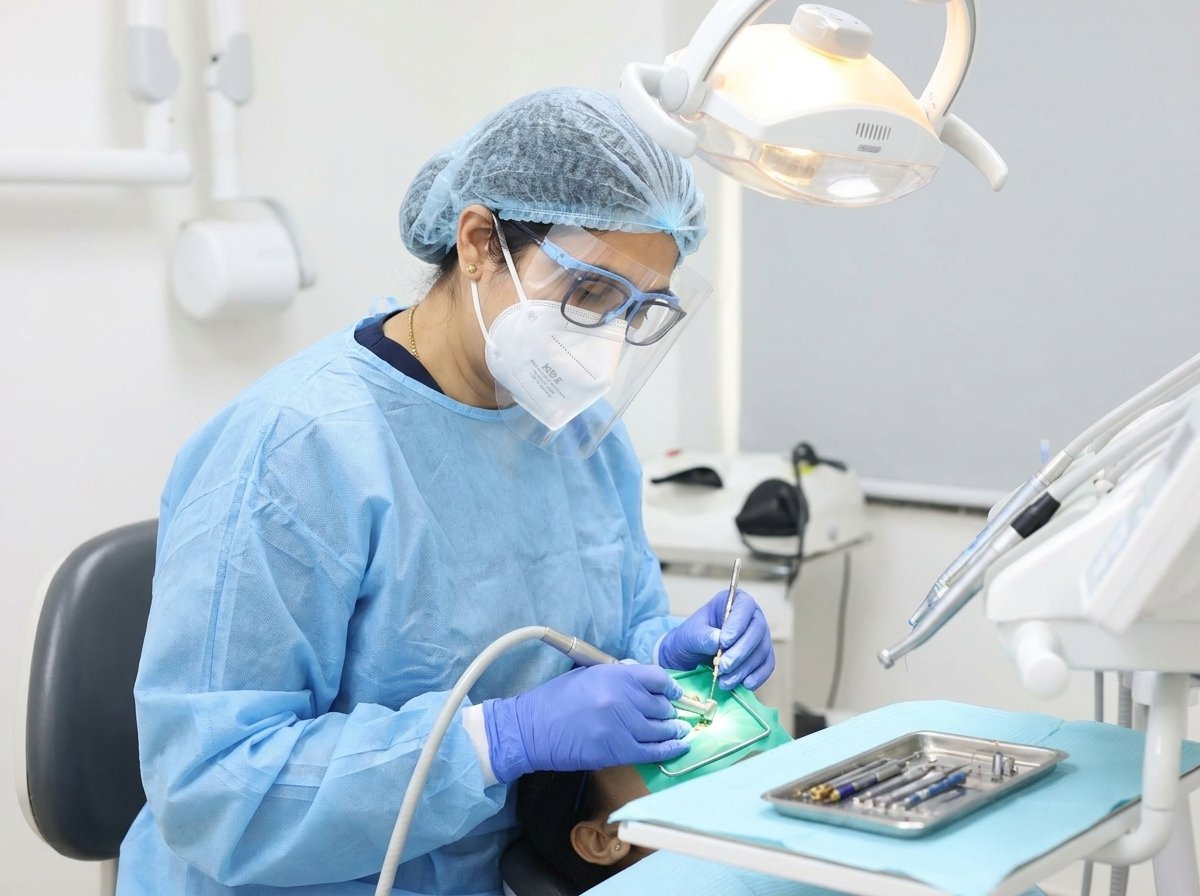
Root canal treatment is used when the soft tissue inside a tooth (the pulp) becomes inflamed or infected — usually as a result of deep decay, a crack or repeated dental work. Treatment involves carefully cleaning the inside of the tooth, disinfecting it and sealing it to prevent further infection. At Dentistree in Camden, we use modern techniques and local anaesthetic so the procedure is generally comparable in comfort to having a routine filling.
Why saving the natural tooth matters
Where possible, keeping your natural tooth is usually preferable to extraction. Natural teeth are designed to chew efficiently, support neighbouring teeth and maintain bone in the jaw. Root canal treatment has a generally good success rate when done well and followed by an appropriate restoration — most posterior (back) teeth that have had a root canal will need a crown afterwards to protect the remaining tooth structure. Some complex cases may be referred to an endodontist (root canal specialist), and your dentist will let you know if that's the right call in your situation.
- Assessment of pain, X-rays and pulp testing
- Treatment performed under local anaesthetic
- Modern techniques to clean and seal the tooth
- Discussion of the final restoration (often a crown)
- Honest discussion of alternatives, including extraction
- Referral to a specialist where appropriate
Book your appointment
Ready to get started? Book online any time, or give our friendly team a call — we're happy to answer your questions.
Frequently asked questions
You might also be interested in
Explore other dental services available at Dentistree in Camden.
Crowns & bridges
Most back teeth that have had a root canal need a crown afterwards.
Learn moreExtractions
An alternative if a tooth can't be saved with root canal treatment.
Learn moreDental implants
A long-term replacement option after extraction.
Learn moreFillings & restorations
Sometimes a deep filling is enough to protect the nerve and avoid a root canal.
Learn moreX-rays & diagnostics
Imaging is essential for diagnosing and planning root canal treatment.
Learn moreSedation / sleep dentistry
Comfort options for nervous patients facing endodontic treatment.
Learn moreReady for a calmer dental visit?
Book online or call our friendly team. We'll take the time to listen and explain everything clearly.