
Tooth extractions in Camden
Gentle, careful tooth removal when keeping a tooth is no longer the best option for your long-term oral health.
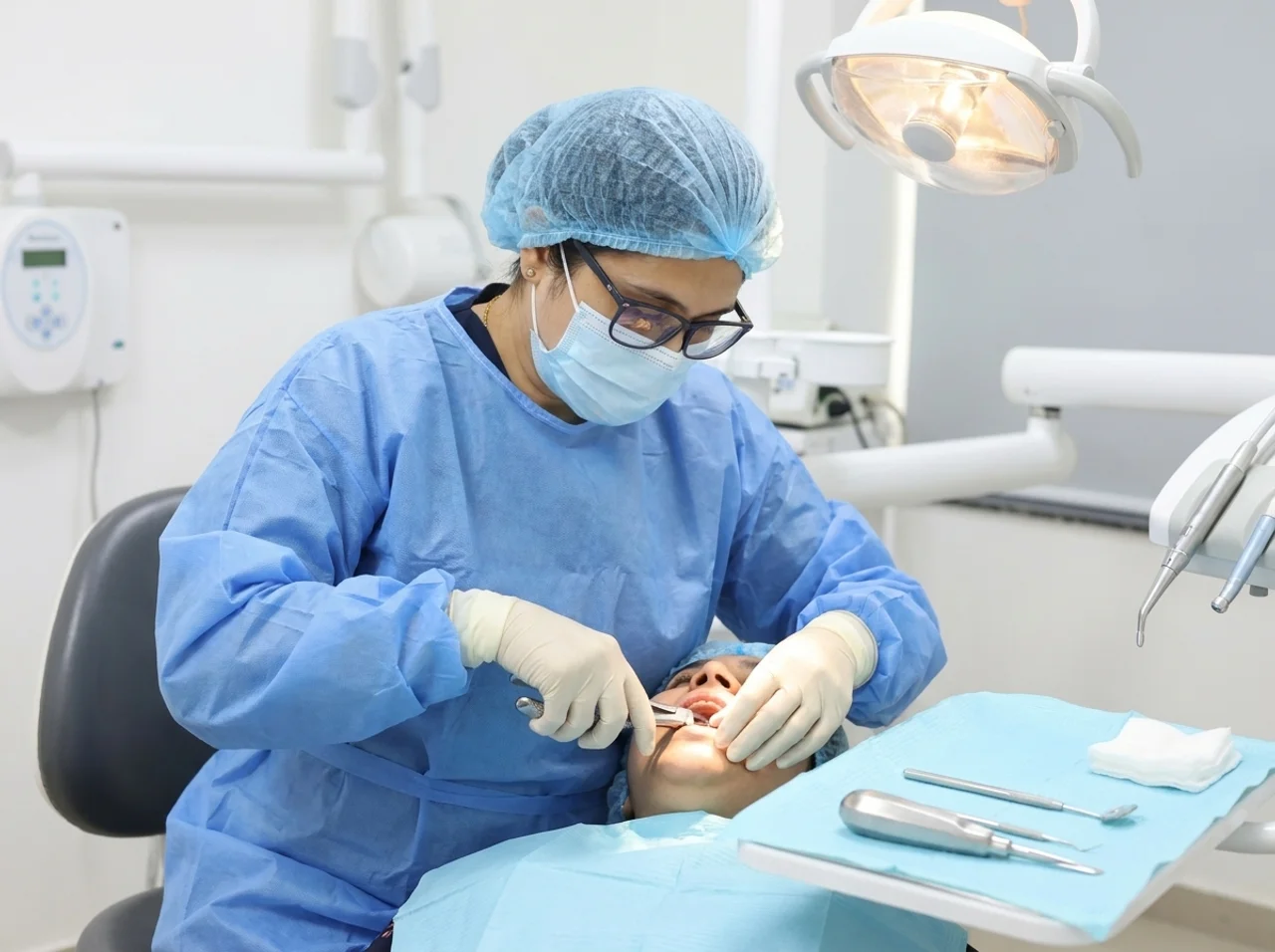
Although saving your natural teeth is always the goal, sometimes a tooth needs to be removed — for example when it's badly decayed, fractured, severely infected, or causing crowding. At Dentistree in Camden, extractions are carried out under local anaesthetic in a calm, unhurried environment. Your dentist will explain what's involved, answer your questions, and discuss tooth replacement options where appropriate so you can make an informed decision.
Comfort, safety and clear aftercare
A straightforward extraction is usually a quick procedure performed under local anaesthetic, so the area is fully numb. Your dentist will assess the tooth (and may take an X-ray if clinically indicated) before treatment, and you'll receive clear written aftercare instructions to support healing — including guidance on bleeding control, eating, brushing around the area, and managing any discomfort. Where a tooth has been removed, we'll also discuss whether a replacement option such as an implant, bridge or denture may be suitable.
- Routine and surgical extractions
- Treatment under local anaesthetic
- Removal of damaged, decayed or problem teeth
- Wisdom tooth assessment and referral when needed
- Clear written aftercare instructions
- Discussion of tooth replacement options
Book your appointment
Ready to get started? Book online any time, or give our friendly team a call — we're happy to answer your questions.
Frequently asked questions
You might also be interested in
Explore other dental services available at Dentistree in Camden.
Dental implants
A long-term tooth replacement option after extraction.
Learn moreDentures
Removable replacement teeth, including immediate dentures fitted on the day of extraction.
Learn moreCrowns & bridges
A bridge can replace a single missing tooth using neighbouring teeth for support.
Learn moreRoot canal treatment
Sometimes an alternative to extraction when the tooth can be saved.
Learn moreSedation / sleep dentistry
Comfort options for patients who'd like extra help relaxing during the procedure.
Learn moreEmergency dental
Urgent help for severe pain, infection or trauma involving a tooth.
Learn moreReady for a calmer dental visit?
Book online or call our friendly team. We'll take the time to listen and explain everything clearly.